Chia Seeds: From Ancient Superfood to Modern Nutritional Powerhouse
Nilesh Dadaji Ahire*
Published Date: 2025-04-11DOI10.36648/ipctn.10.2.90
Nilesh Dadaji Ahire*
Department of Pharmaceutical Engineering and Technology, IIT (BHU), Varanasi, India
- *Corresponding Author:
- Nilesh Dadaji Ahire Department of Pharmaceutical Engineering and Technology, IIT (BHU), Varanasi, India E-mail:nilesha978@gmail.com
Received date: September 03, 2024, Manuscript No. IPCTN-24-19589; Editor assigned date: September 05, 2024, PreQC No. IPCTN-24-19589 (PQ); Reviewed date: September 19, 2024, QC No. IPCTN-24-19589; Revised date: April 04, 2025, Manuscript No. IPCTN-24-19589 (R); Published date: April 11, 2025, DOI: 10.36648/ipctn.10.2.90
Citation: Ahire ND (2025) Chia Seeds: From Ancient Superfood to Modern Nutritional Powerhouse. J Nutraceuticals Food Sci Vol:10 No:2
Abstract
Chia seeds, originating from the Salvia hispanica L. plant, have been an essential part of ancient Mesoamerican diets, notably among the Mayan and Aztec cultures. Today, these seeds are celebrated as a contemporary superfood due to their impressive nutritional benefits and versatility in the kitchen. This paper examines the transformation of chia seeds from their historical significance to their modern-day acclaim, focusing on their nutritional content and varied uses in cooking. Rich in omega-3 fatty acids, chia seeds play a key role in reducing inflammation, supporting cognitive function, and managing cholesterol levels. They are also a valuable source of dietary fiber, antioxidants, and essential micronutrients. The high fiber content of chia seeds supports healthy digestion and cholesterol management, while antioxidants offer protection against oxidative stress, aging, and some cancers. Chia seeds' adaptability makes them a favored ingredient in numerous recipes, from smoothies to baked goods. This review provides an in-depth analysis of the nutritional, phytochemical, and pharmacological advantages of chia seeds, clarifying common misconceptions and incorporating findings from recent metabolomic studies. By exploring their journey from ancient staple to modern health food, this paper underscores the important role chia seeds play in fostering overall health and well-being.
Keywords
Chia seeds; Sabja; Skin protective; Mesoamerican civilizations; Nutritional powerhouse
Introduction
Chia (Salvia hispanica L.) belongs to the Salvia genus, which encompasses around 900 species of various green plants, including shrubs and subshrubs, within the Lamiaceae family. Native to central and southern Mexico, chia seeds are derived from the Salvia hispanica plant, a member of the mint family. These seeds are small, oval-shaped, and feature a gray color with black and white speckles, each approximately 2 millimeters in diameter. When exposed to liquid, chia seeds have the unique ability to absorb up to 12 times their weight, causing them to expand and develop a gel-like texture that enhances the sensory experience of chia-based dishes and drinks. Similar in size to sesame seeds, chia seeds are harvested from a plant with a long history of cultivation. They are densely packed with essential nutrients, including omega-3 fatty acids, fiber, protein, calcium, iron, zinc, copper, manganese, magnesium, phosphorus, potassium, sodium, and a range of B vitamins such as thiamine, riboflavin, niacin, and folate. Recognized for their remarkable nutritional density, chia seeds are often referred to as a "nutritional powerhouse" due to their significant potential to support health and provide substantial energy.
Materials and Methods
Chia seeds are tiny, flattened ovals, measuring approximately 2.1 mm by 1.3 mm by 0.8 mm, and they weigh around 1.3 mg each. Their surface is a patchwork of brown, gray, black, and white hues. When soaked, these seeds can absorb up to 12 times their weight in liquid, creating a gel-like texture due to their mucilaginous coating. The most common chia seeds come from the plant Salvia hispanica L., but there’s also a variety called "golden chia" from Salvia columbariae, which is also edible. Yields of chia seeds can vary depending on the type of seed, cultivation methods, and growing environment. For example, in countries like Argentina and Colombia, commercial yields typically range from 450 to 1,250 kg per hectare. However, studies in Ecuador’s inter-Andean valleys have reported yields as high as 2,300 kg per hectare with three different cultivars, suggesting that the right environmental conditions combined with suitable cultivars can lead to significantly higher yields.
While the specific variety of chia plant influences the yield, its effect on protein levels, oil content, fatty acid composition, and phenolic compounds is less pronounced. Elevated temperatures generally reduce the oil content and unsaturation in the seeds but may increase their protein content.
What are chia seeds?
Chia seeds are just like any other edible seed. They are used in food due to their nutritional and medicinal properties. Many types of medicinal seeds are found in India. That is why Chia seeds are also considered to be Indian seeds. Not so actually, India imports chia seeds from abroad. Today, chia seeds are often used to treat health related problems. Researchers have also agreed that chia seeds contain many nutrients, which can fight many serious diseases.
What chia seeds look like
Chia seeds are very fine in size. They look very beautiful. The color of chia seeds is white, brown or black. The main water absorption capacity is found in chia seeds. Chia seeds are pest free. This is because they have no taste (Figure 1).
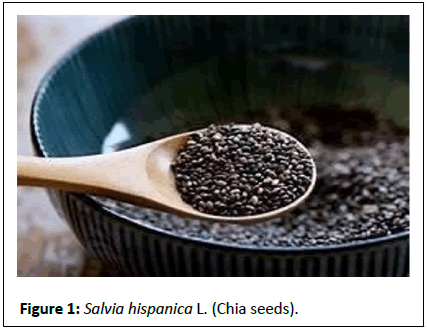
Figure 1: Salvia hispanica L. (Chia seeds).
Misconceptions about chia seeds
Chia seeds and basil seeds look very similar. So many people consider chia seeds as basil seeds. But not so, both of them are different seeds. Chia seeds are also known as Sabja, Tukmalang and Takmaria in many states of India. But this is also not correct. Sabja, Tukmalang and Takmaria are the names of Tulsi seeds. In English they are called Basil seeds. Basil seed is a seed of the genus Lamiaceae. His Scientific name is Ocimum basilicum. Chia seeds are another type of seed (Figure 2) [1].
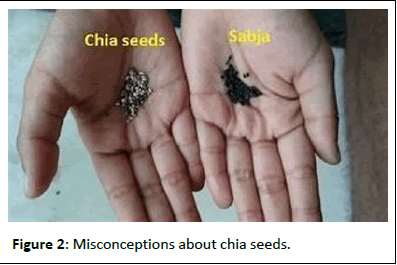
Figure 2: Misconceptions about chia seeds.
Chia seed planting
Most of the chia seeds are produced in America. Hence their origin is considered to be American. The chia seed plant is said to have first originated in Mexico and Guatemala. Researchers say that the first cultivation of chia seeds was in Mexico and Guatemala. Chia seeds were first cultivated by the Aztecs [2]. Currently, Chia seeds are being produced in countries like America, Mexico, Australia etc. Our country India imports chia seeds from Mexico (Figure 3).
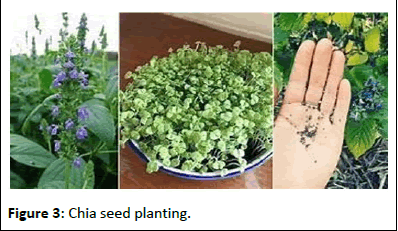
Figure 3: Chia seed planting.
Results and Discussion
Nutritional properties of chia seeds
Different people lack different things in their bodies. So different people have different nutritional requirements. It is important to know the nutritional content of anything before consuming it. Among seeds, chia is notably high in omega-3 fatty acids, apart from this, chia seeds are rich in nutrients like potassium, fiber, carbohydrates, protein, zinc, copper, omega 6, fat, sodium, phosphorus, calcium, magnesium, etc. It also has antiseptic, antifungal and antioxidant properties. It is clear from that consumption of chia seeds provides many benefits to the body (Table 1 and Figure 4) [3].
| Nutrients | Proportion |
| Calories | 486 |
| Water | 6% |
| Proteins | 16.5 gm |
| Carbohydrates | 42.1 gm |
| Sugar | 0 gm |
| Fiber | 34.4 gm |
| Fat | 30.7 gm |
| Saturated fat | 3.33 gm |
| Monosaturated fat | 2.31 gm |
| Polyunsaturated fat | 23.67 gm |
| Omega3 fatty acid | 17.83gm |
| Omega-6 fatty acid | 5.84 gm |
| Trans fat | 0.14 gm |
Table 1: Nutrients contain in 100 gm of chia seeds.
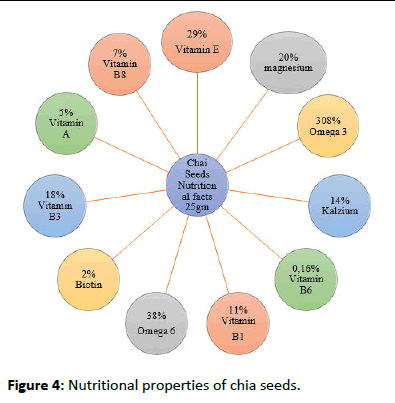
Figure 4: Nutritional properties of chia seeds.
Benefits of chia seeds
You must have heard the saying that idols are small, but fame is great. This saying fits perfectly with chia seeds. Chia seeds are fine in appearance. However, their benefits chia seeds benefits are very big.
Digestive process: Chia seeds benefits: Digestion is important for a healthy body. If our digestive process is not smooth, our body can be susceptible to many diseases. So, it is important to have a smooth digestive process. Chia seeds are rich in fiber, which keeps the digestive process running smoothly. So, for smooth digestion process we should include chia seeds in our diet.
Helpful for weight loss: Obesity has become a fundamental problem nowadays, almost two out of three people are suffering from obesity problem. If obesity is not controlled in time, it leads to serious diseases. This is the reason why most people worry and stress about obesity. People try all possible to reduce obesity but still they do not lose weight. Consuming a proper diet is also essential for weight loss. If you lose weight and don't eat right, you will never lose weight. Chia seeds are full of nutritional properties. It is rich in fiber [4,5]. Fiber is one that helps in weight loss as well as weight control. If you want to lose weight, definitely include chia seeds in your diet.
Beneficial for heart health: If we have any disease related to heart, then it proves to be very dangerous for the body. Sometimes a heart-related disease becomes the cause of death of a person. So keeping the heart healthy is very important. If you have any heart related disease or if you want to keep your heart healthy, start adding chia seeds to your diet from today. Chia seeds contain fiber, omega 3, antioxidant properties that not only keep the heart healthy but also protect against the risk of heart disease.
For bone and tooth health: Taking care of bones and teeth is very important. Now-a-days most of the people prefer take-out food. In the fast-paced modern lifestyle many individuals turn to commercially available food rather than cooking for themselves. What we eat must contain essential nutrients. Outside foods do not contain essential nutrients. Along with calcium, many other nutrients are needed to keep bones and teeth strong. Chia seeds contain more calcium than milk. So, consuming it strengthens bones and teeth.
Beneficial on diabetes: Diabetes has become a common disease nowadays. It is a disease that cannot be completely cured. But a person can control diabetes by changing their diet. To combat this issue, including chia seeds in the diet can be helpful, as they contribute to improved blood pressure management for those with diabetes. The omega 3 fatty acids found in it normalize the sugar levels, thereby controlling the diabetes problem to a great extent.
Beneficial for skin: Every person wants to be beautiful. That's why to make the skin beautiful, people go to the parlor. There are many types of treatment. Also resort to various home remedies. But still the skin does not glow. Chia seeds provide skin nourishment as well as protect the skin from many diseases. Chia seeds make skin healthy Chia seeds contain antioxidants that prevent bacterial growth. Chia seeds have antifungal properties that help make the skin healthy and beautiful for a long time. This makes the skin glow [6].
Helps to reduce cholesterol: Due to increase in cholesterol, there is a risk of many serious diseases in the body. If the level of cholesterol increases in a person, it can lead to many diseases like heart attack, heart disease, fatigue, kidney disease, paralysis. Therefore, it is very important to keep cholesterol in balance in the body. Chia seeds are very beneficial for lowering cholesterol. Chia seeds are rich in omega-3 fatty acids, which help reduce low-density lipoproteins levels and support cardiovascular health. Along with consuming chia seeds to control cholesterol, one should also stop consuming oily foods.
Because cholesterol increases due to oily foods.
Increases immunity: When a person's immune system is weak, that person is affected by any disease or any weather sooner than any other person. When a disease spreads, people with weak immune systems start to panic because they fear contracting the disease. Chia contributes a lot in boosting the immune system because of the properties of antioxidants and fiber found in chia seeds. Fiber strengthens the digestive system, so that your body gets the proper nutrition from what you eat. Antioxidants keep the body healthy, thereby strengthening the immune system.
How to consume chia seeds?
Anything is beneficial only when it is consumed with proper demand. So, after giving a lot of information about the small but energy rich chia seeds, let us now know how to consume these seeds.
• Chia seeds can be mixed with oats or fruit salad and eaten for breakfast in the morning.
• Make chia seed powder. One spoon of the powder can be taken with warm milk or water.
• A spoonful of chia seeds can be mixed with curd and consumed during meals.
• Soak chia seeds in water for three to four hours before eating. Seeds sticky gel after soaking will be the same. We can consume this gel by mixing it with shake, milk or juice. Add some chia seeds while making upma, poha or idli and eat it for breakfast in the morning.
Disadvantages of chia seeds
If something has advantages, it also has some disadvantages. Therefore, before using any product it is necessary to have complete information about it. We have told you about some of the benefits of chia seeds. So now let us know about some disadvantages of chia seeds Patients suffering from prostate cancer should not consume chia seeds. Excessive consumption of chia seeds can cause allergies, vomiting, diarrhoea, itching etc.
Overview of the packaged chia seed market
The packaged chia seed market is anticipated to grow to $3.7 billion by 2026, with an annual growth rate of 6.1% from 2021 to 2026. These seeds, safeguarded by multilayer packaging, are valued for their energy-boosting and nutritional benefits. Rich in antioxidants, omega-3 fatty acids, iron, and calcium, chia seeds are incorporated into a variety of foods, including seed blends, breakfast cereals, and baked goods. They play a role in stabilizing blood sugar levels, enhancing metabolism, and reducing cardiovascular risk.
The surge in market growth can be attributed to heightened health awareness and a growing inclination towards ancient grains. Additionally, the increasing demand for natural food components and the shift towards organic and gluten-free products in the food and beverage sector are expected to further stimulate the global packaged chia seed market from 2021 to 2026.
Recent consumer trends reveal a strong movement towards healthier lifestyle choices. People are becoming more attuned to the nutritional value and health benefits of their diets. Chia seeds have gained prominence due to their exceptional nutritional profile, including omega-3 fatty acids, fiber, and antioxidants. This rising fascination with nutrient-rich ancient grains is a major driver of the market's expansion.
The food and beverage industry are adapting to consumer preferences for products that are not only flavourful but also natural and health-conscious. One notable trend is the increasing use of natural ingredients, such as chia seeds, across a variety of products including beverages, snacks, and baked goods, to boost their nutritional value. This shift towards natural ingredients is driving the expansion of the packaged chia seed market.
Additionally, there is a growing demand for organic and gluten-free products among those who are health-oriented. Many consumers are choosing organic options to steer clear of pesticides and chemicals, while others seek gluten-free choices due to dietary needs or personal preferences [7]. Chia seeds, which are naturally gluten-free and often available in organic forms, align well with these trends (Figure 5). Consequently, the market for packaged chia seeds is anticipated to experience significant growth between 2021 and 2026 [8,9].
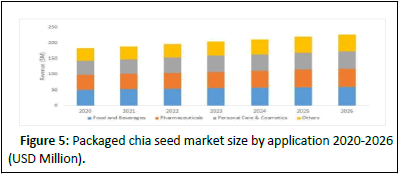
Figure 5: Packaged chia seed market size by application 2020-2026 (USD Million).
Available marketed products
1) Organic box raw chia seeds
Special features
• Rich in fiber, anti-ageing
• Protein and omega-3 nitrogen flushed for extra freshness
• Energy booster
• Versatile kitchen staple
• Antioxidant properties
2) Desire chia seeds
Special features
• USDA certified
• Gluten free
• Micronutrient powerhouse
• High-quality ingredients
• Rich nutritional profile
3) True elements chia seeds
Special features
• Nutrient rich
• Raw and natural
• Quality assurance
• Raw and natural
4) Livyor raw chia seeds
Special features
• Zero chemicals used
• Organic in nature
• High in fibre
5) Nutri organics chia seeds
Special features
• Fibre filled
• Gluten free
• Low in calories and cholesterol
• Calcium rich
• Nature's touch commitment
• Omega fatty acids
• Humanitarian values (Figures 6-9)
• Loaded with antioxidants
• Rich in essential nutrients
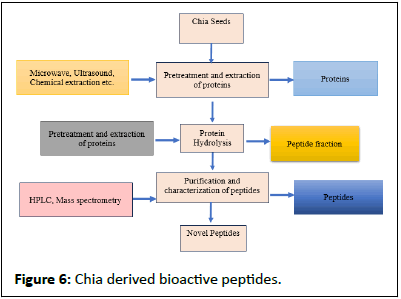
Figure 6: Chia derived bioactive peptides.
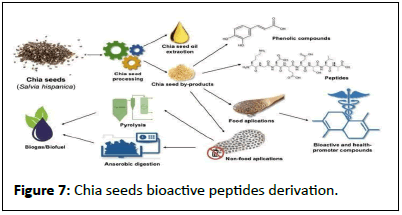
Figure 7: Chia seeds bioactive peptides derivation.
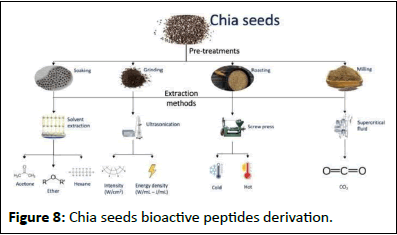
Figure 8: Chia seeds bioactive peptides derivation.
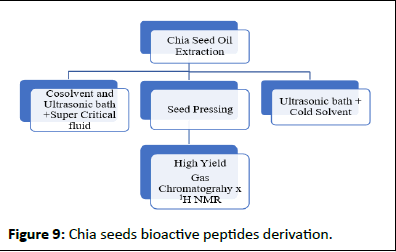
Figure 9: Chia seeds bioactive peptides derivation.
Conclusion
Chia, known scientifically as Salvia hispanica L., has been utilized for its dietary and medicinal properties since ancient times. The plant produces small seeds that can be either white or dark. In recent years, chia seeds have garnered considerable attention from both researchers and health enthusiasts due to their numerous health benefits. These seeds are rich in fats, carbohydrates, dietary fiber, proteins, and essential vitamins including A, B1, B2, and B3. They also provide a wealth of important minerals and potent antioxidants.
Chia seeds are especially notable for their high content of flavonoids such as quercetin, chlorogenic acid, and caffeic acid, which have demonstrated anticancer, antihypertensive, and neuroprotective properties. Additionally, chia seeds are a valuable source of polyunsaturated omega-3 fatty acids, which are known to combat inflammation, enhance cognitive function, and lower cholesterol levels.
The antioxidants present in chia seeds play a role in mitigating the risk of chronic diseases such as cancer and heart disease, while also offering protective benefits against conditions like diabetes, Alzheimer's disease, and Parkinson's disease. Furthermore, the high fiber content in chia seeds contributes to a lower risk of coronary heart disease, type 2 diabetes, and several forms of cancer.
References
- Knez Hrncic M, Ivanovski M, Cör D, Knez Z (2019) Chia seeds (Salvia hispanica L.): An overview—Phytochemical profile, isolation methods, and application. Molecules 18:25
[Crossref] [Google Scholar] [PubMed]
- Kulczynski B, Kobus-Cisowska J, Taczanowski M, Kmiecik D, Gramza-Michalowska A (2019) The chemical composition and nutritional value of chia seeds—Current state of knowledge. Nutrients 11:1242
[Crossref] [Google Scholar] [PubMed]
- Anderson JW, Baird P, Davis RH, Ferreri S, Knudtson M, et al. (2009) Health benefits of dietary fiber. Nutr Rev 67:188–205
[Crossref] [Google Scholar] [PubMed]
- Fernandes SS, Tonato D, Mazutti MA, de Abreu BR, da Costa Cabrera D, et al. (2019) Yield and quality of chia oil extracted via different methods. J Food Eng 262:200–208
- Sanchez-Velazquez OA, Mondor M, Segura-Campos MR, Hernandez-Alvarez AJ (2022) Bioactive phytochemicals from chia seed (Salvia hispanica) oil processing by-products. In: Reference Series in Phytochemistry
- Mensah EO, Nadtochii L, Adadi P, Agyei D (2024) Chia derived bioactive peptides: Extraction, characterization, pharmacological activities and potential food applications. Food Biosci 59:103975
- Pasko P, Sajewicz M, Gorinstein S, Zachwieja Z (2008) Analysis of selected phenolic acids and flavonoids in Amaranthus cruentus and Chenopodium quinoa seeds and sprouts by HPLC. Acta Chromatogr 20:661–672.
- Coelho MS, Salas-Mellado MM (2018) How extraction method affects the physicochemical and functional properties of chia proteins. LWT 96:26–33
- Rahman MJ, de Camargo AC, Shahidi F (2017) Phenolic and polyphenolic profiles of chia seeds and their in vitro biological activities. J Funct Foods 35:622–634.
Open Access Journals
- Aquaculture & Veterinary Science
- Chemistry & Chemical Sciences
- Clinical Sciences
- Engineering
- General Science
- Genetics & Molecular Biology
- Health Care & Nursing
- Immunology & Microbiology
- Materials Science
- Mathematics & Physics
- Medical Sciences
- Neurology & Psychiatry
- Oncology & Cancer Science
- Pharmaceutical Sciences